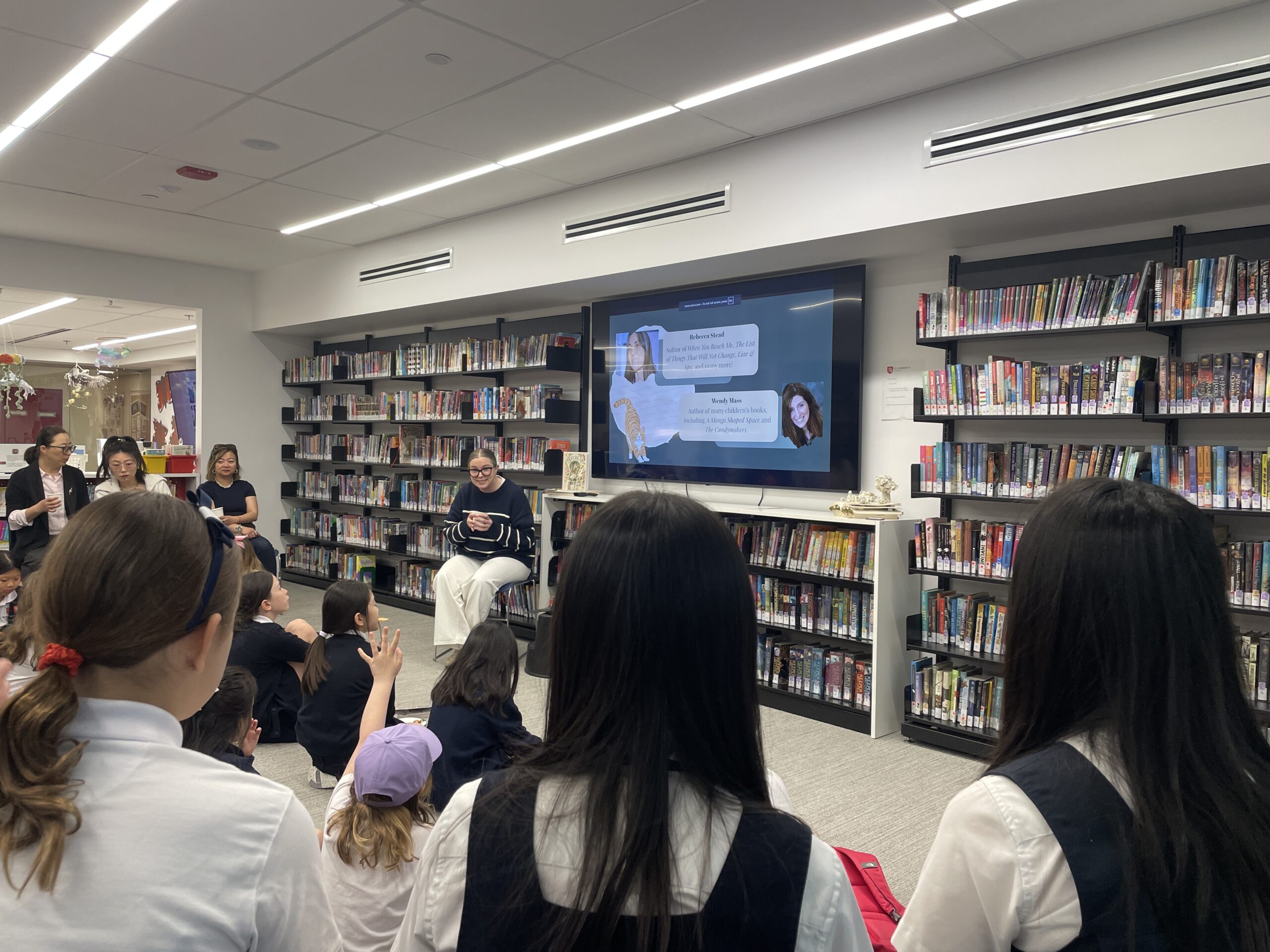
The halls of 21 St. Clements Avenue were unusually still for 7:30 a.m.—save for the sound of pleasant chatter emanating from the Lassonde Library and Babber Family Reading Room.
A committed cohort of students and adults were trickling into the library in pairs. They greeted their fellow early birds and assessed the assortment of breakfast snacks on offer. When the refreshments had been sufficiently nibbled and updates had been sufficiently exchanged, SCS’s outgoing Head of Library and Information Services Laura Mustard ’03 beckoned them to join her in the centre of the library. It was time to kick off the year’s third and final meeting of the Hooked on Books club.
This beloved book club is open to students in Grades 3-6 and any special adult they choose to bring along. Initially a mother-daughter book club for Grade 5 students, its mandate grew in tandem with the School’s own expansion. “When the renovations were finished and we had this beautiful new space, we were able to extend the invitation more broadly to anyone in the family who wanted to attend,” recalls Laura, who has been running the program for the last fourteen years. “Since then, we’ve had grandparents, dads, cousins, and siblings attend, which is really nice.”
Her only request is that these guests of honour also read the chosen book and come prepared to discuss it. This time around, Laura had selected The Lost Library by Rebecca Stead and Wendy Mass, which follows a varied cast of characters drawn together by the mystery of how their town’s library burned down decades ago. This gripping, heartfelt novel was a hit with students and adults alike; Nimmy Ringer ’35 and her mom Ruth Geddie ’00 loved it so much that they sought out the authors’ other works immediately after finishing it.
Introducing students to new titles is just one of the club’s copious benefits. It also presents a safe place for young readers to engage more deeply with the act of reading; as they consider the thought-provoking questions Laura has crafted for them, they can observe how other (sometimes older) students approach literary analysis. “With the big differences in maturity that happen between those ages, the sixth graders are noticing things that the third graders aren’t necessarily,” notes Laura. In time, that cross-grade reflection can shape these Clementines into more skilled, critical readers.
But those practical advantages are ancillary to Hooked on Books’ true strength: the opportunities it creates for shared reading. After Ruth and Nimmy returned home, they ended up devouring one of their newfound books in the span of a single, cozy afternoon together—a moment that neither is likely to soon forget.
Stories like these sustain Laura’s belief in the club’s transformative power. She always hoped it would provide a built-in reason for the students to enjoy a book with their families, but she didn’t expect how much the adults would treasure it. “It’s when parents thank me for that experience with their child that means the most,” she admits. “I’ve even gotten the request for versions of this book club at different grade levels from parents whose daughters have aged out of Hooked on Books!”
It’s clear why. Book clubs turn an otherwise solitary experience into a communal one. They bridge our internal worlds and open a channel for us to trade ideas and interpretations, wishes and worries, delights and despondences. In doing so, they offer something increasingly rare: a chance for genuine connection.
For parents, that’s reason enough to get hooked on books.